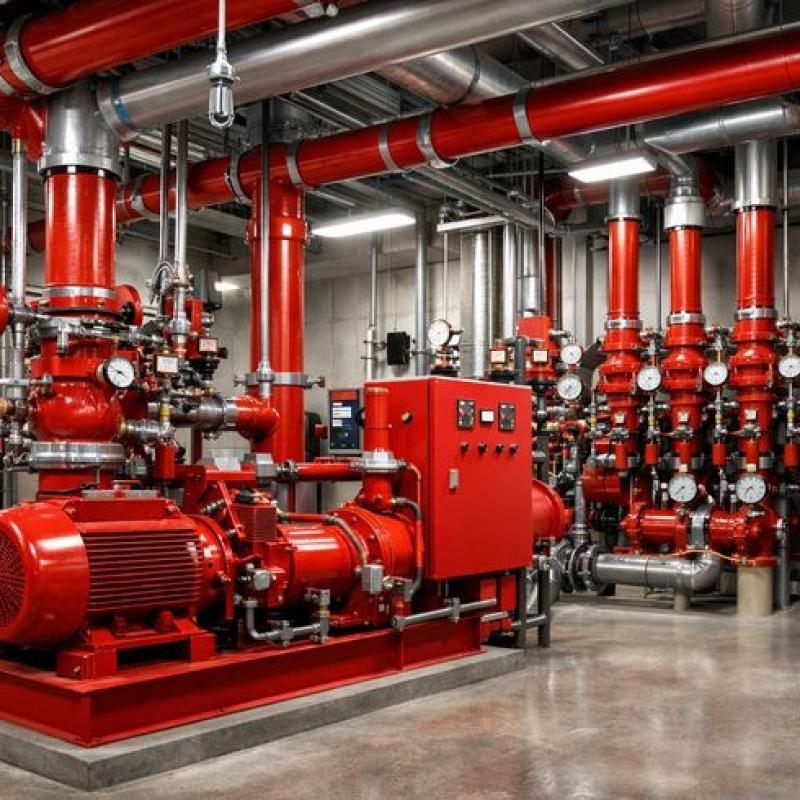


Fire can spread rapidly, especially in industrial buildings, factories, warehouses, commercial properties, and high-occupancy facilities. A properly designed Fire Sprinkler System provides an important layer of active fire protection by automatically applying water to control or suppress a developing fire.
But how exactly does a sprinkler system work? Do all sprinklers activate at the same time? Does a sprinkler detect smoke? What happens when one sprinkler head activates?
These are common questions for building owners, developers, engineers, and fire safety professionals.
In this guide, we explain the working principle of automatic fire sprinkler systems, their major components, activation process, and key considerations based on NFPA standards, particularly NFPA 13 for sprinkler system installation and NFPA 25 for inspection, testing, and maintenance.
For projects in Bangladesh, also consider the applicable requirements alongside the Bangladesh National Building Code (BNBC) 2020 and the requirements of the relevant Authority Having Jurisdiction (AHJ). The official Housing & Building Research Institute (HBRI) provides access to BNBC 2020. (hbri.gov.bd)
What Is a Fire Sprinkler System?
A fire sprinkler system is an automatic water-based fire protection system designed to discharge water when heat from a fire causes an individual sprinkler to activate.
Unlike a common misconception, a standard automatic sprinkler does not normally activate simply because smoke is present. The sprinkler head responds primarily to heat reaching its operating temperature.
A typical system may include:
| Sprinkler heads | Alarm/check valves | Flow switches |
| Water supply | Alarm/check valves | Supervisory/tamper switches |
| Fire pump system | Pipes and fittings | Inspector’s test connection |
| Control valves | Pressure gauges | Fire department connection |
The exact arrangement depends on the building, hazard classification, system type, water supply, and approved design.
How Does a Fire Sprinkler System Work?
The basic operating sequence can be understood in several steps.
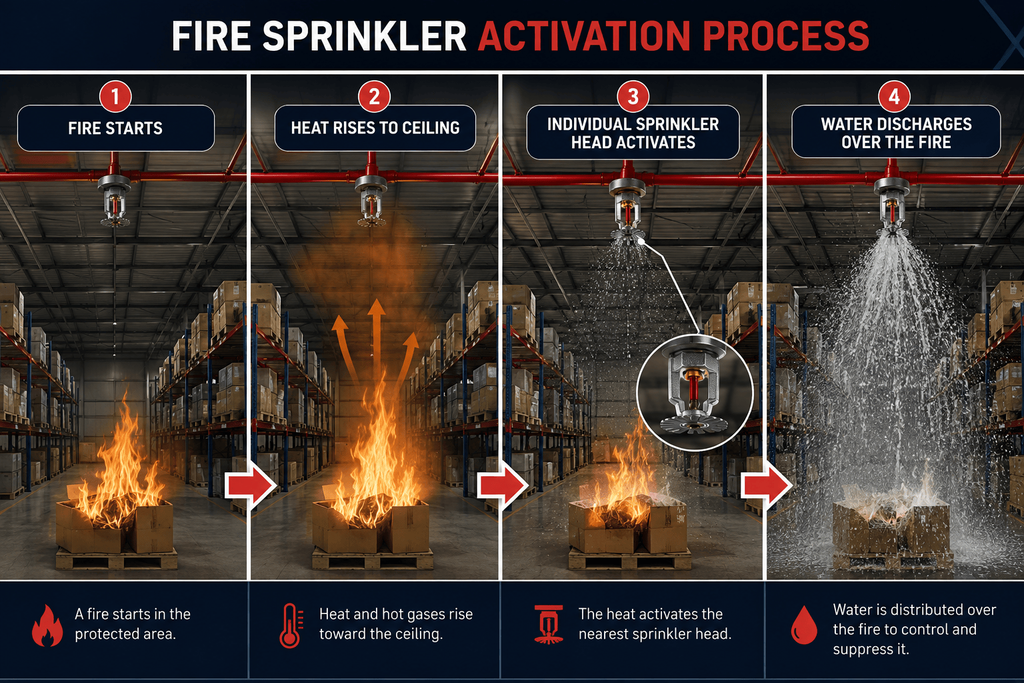
Step 1: Fire Starts and Heat Rises
When a fire starts, hot gases rise toward the ceiling. As the hot layer develops, the temperature around the nearest sprinkler head increases.
The sprinkler is positioned and selected so that its heat-sensitive operating element can respond when the surrounding temperature reaches its rated activation temperature.
Important: A sprinkler head generally responds to heat—not smoke.
Step 2: The Sprinkler Head Activates
When sufficient heat reaches the sprinkler’s heat-sensitive element, the element releases.
Depending on the sprinkler design, this may involve a glass bulb or fusible element.
Once the operating element releases, the sprinkler opens and water begins to discharge.
Step 3: Water Is Discharged Over the Fire Area
Water stored under pressure in the sprinkler piping flows through the activated sprinkler.
The sprinkler’s deflector distributes the water over the intended coverage area.
The objective is to control or suppress the developing fire and limit fire growth, depending on the system’s design criteria and the specific hazard.
Step 4: Water Flow Is Detected
When water begins moving through the system, the associated waterflow detection arrangement can operate.
Depending on the system design, waterflow may initiate an alarm signal through a waterflow switch or other approved arrangement.
This allows the building’s fire alarm system and/or monitoring arrangement to indicate that sprinkler water is flowing.
Step 5: The Fire Protection System Responds
The water supply must provide the required flow and pressure for the designed system.
For many larger facilities, the water supply may involve a combination of:
Water Storage → Fire Pump → Control Valve → Riser → Branch Pipes → Sprinkler Heads
The actual configuration depends on the approved hydraulic design and system type.
Do All Sprinklers Activate at the Same Time?
No.
This is one of the most important things to understand about automatic sprinkler systems.
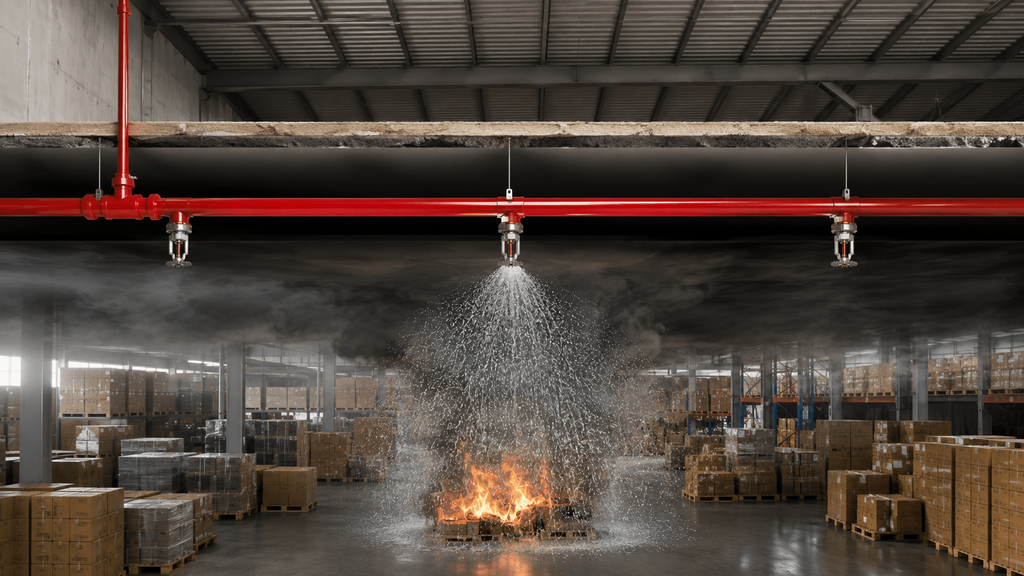
In a typical sprinkler system, individual sprinkler heads operate when their own heat-sensitive elements reach their operating temperature.
Therefore, if a fire is concentrated in one area, only the sprinkler heads exposed to sufficient heat may operate initially.
This localized activation can help deliver water where it is needed instead of automatically discharging water from every sprinkler head throughout the building.
The number and arrangement of sprinklers required for a particular hazard are determined during the system design process.
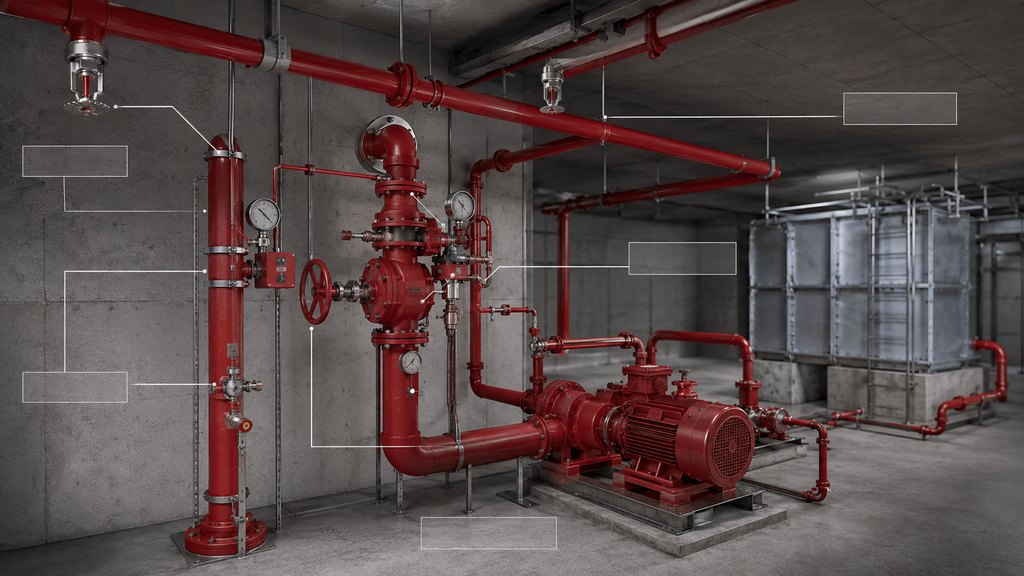
Main Components of a Fire Sprinkler System
1. Sprinkler Heads
The sprinkler head is the final water discharge device.
Different sprinkler types and configurations are available for different applications, ceiling arrangements, temperatures, and hazard conditions.
Selection should be based on the approved design rather than simply choosing a sprinkler based on appearance or price.
2. Piping Network
The piping network transports water from the water supply to the sprinkler heads.
Pipe sizing, routing, spacing, and hydraulic performance are important parts of sprinkler system design.
3. Control Valves
Control valves are used to control the water supply to the sprinkler system.
They also need to remain in the correct operating position so that the system can function when required.
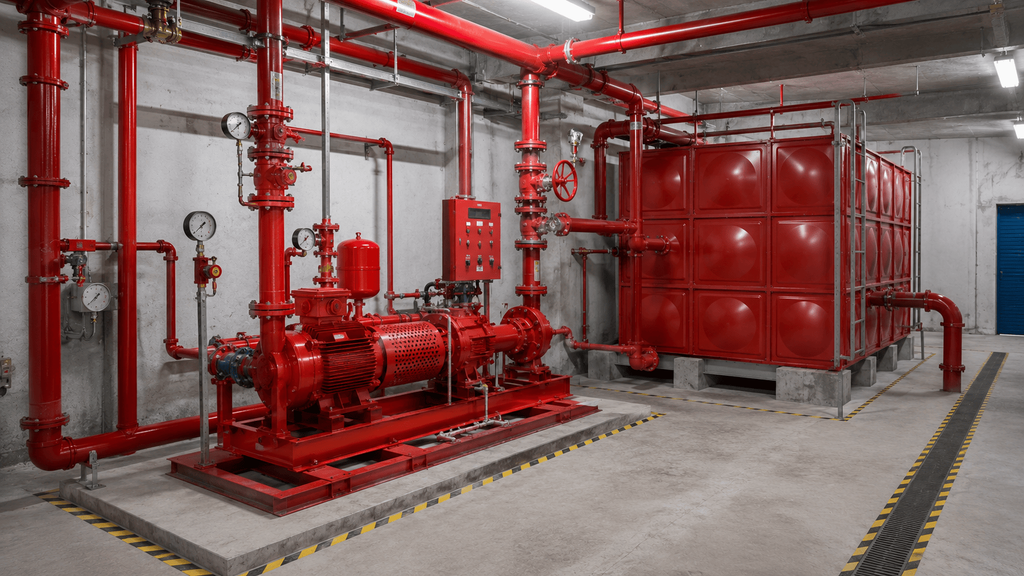
4. Fire Pump
Where the available water supply cannot provide the required pressure and flow, a fire pump system may be required.
The pump arrangement should be selected and installed according to the applicable design requirements and relevant standards.
5. Water Storage Tank
Some buildings require dedicated fire water storage to provide the necessary water supply for the fire protection system.
The required capacity depends on the system design, hazard, water demand and applicable requirements.
6. Alarm and Supervisory Devices
Waterflow switches and valve supervisory devices can provide important signals to the fire alarm or monitoring system.
These devices help identify water flow and certain abnormal conditions affecting system readiness.
What Does NFPA 13 Have to Do With Fire Sprinkler Systems?
NFPA 13, Standard for the Installation of Sprinkler Systems, is a key reference for the design and installation of automatic sprinkler systems.
It addresses important aspects of sprinkler system design and installation, including the selection and arrangement of sprinklers, piping, water supply, and hydraulic design considerations.
However, an important distinction should be made:
NFPA 13 is primarily an installation standard; it is not a substitute for the complete building code or AHJ requirements.
The final design must consider the applicable code, occupancy, hazard classification, construction features, water supply and project-specific requirements.
For a Bangladesh project, the design team should coordinate applicable NFPA requirements with BNBC 2020 and the requirements of the relevant authorities/AHJ.
Why Hydraulic Calculation Is Important
A sprinkler system is not simply a network of pipes with sprinkler heads attached.
The system must be hydraulically designed to provide the required water flow and pressure at the relevant design area.
Hydraulic calculations help determine factors such as:
- Required water demand
- Pressure requirements
- Pipe sizes
- Friction losses
- Elevation effects
- Available water supply
- Required pump performance
This is particularly important for factories, garment facilities, warehouses and large commercial buildings where the fire protection demand can be significant.
A system that looks properly installed may still fail to provide the required performance if it has not been correctly designed and hydraulically verified.
Types of Fire Sprinkler Systems
The appropriate sprinkler system type depends on the building environment and fire protection requirements.
Wet Pipe Sprinkler System
A wet pipe system normally contains water in the sprinkler piping.
When a sprinkler activates, water is discharged directly through that sprinkler.
Wet systems are commonly used where temperatures remain above freezing and the application is suitable.
Dry Pipe Sprinkler System
A dry pipe system uses pressurized air or another approved gas in the piping instead of water under normal conditions.
When the sprinkler operates and system conditions change, the dry pipe valve allows water to enter the piping.
This type can be considered for areas where freezing conditions could damage a water-filled system.
Preaction Sprinkler System
Preaction systems use additional detection and control arrangements before water is admitted into the sprinkler piping, depending on the specific system configuration.
They can be useful for applications where accidental water discharge needs to be carefully controlled.
Deluge System
A deluge system uses open sprinklers or nozzles, with water released through a valve when the system’s detection/control arrangement operates.
These systems are used for specific high-hazard applications where rapid application of water over a defined area is required.
The system type should always be selected based on a qualified fire protection design.
Fire Sprinkler System vs Fire Alarm System
A sprinkler system and a fire alarm system perform different but complementary functions.
A fire alarm system primarily provides detection, notification and signaling.
A fire sprinkler system provides automatic water discharge for fire control or suppression.
In many modern buildings, these systems work together.
For example:
Fire develops → Sprinkler activates → Water flows → Waterflow signal operates → Fire alarm/monitoring system indicates the event → Emergency response begins
This integrated approach can improve the overall fire safety strategy of a building.
Why Fire Sprinkler Maintenance Is Important
Installing a sprinkler system is only the beginning.
A system must remain operational throughout the life of the building.
NFPA 25, Standard for the Inspection, Testing, and Maintenance of Water-Based Fire Protection Systems, provides requirements and guidance for inspection, testing, and maintenance of water-based fire protection systems. NFPA material also emphasizes the importance of maintaining system reliability through proper inspection, testing, and maintenance. (Document Information Files)
Important maintenance considerations may include:
- Inspecting sprinkler heads
- Checking valves
- Monitoring system pressure
- Testing waterflow devices
- Testing fire pumps
- Checking tanks and water supplies
- Identifying damaged components
- Checking for obstructions
- Correcting deficiencies
- Maintaining appropriate records
NFPA 25 is focused on inspection, testing, and maintenance; it does not replace the design requirements of NFPA 13. (Document Information Files)

Common Fire Sprinkler Problems to Avoid
Even a properly designed sprinkler system can become ineffective if it is not maintained correctly.
Common problems include:
Closed Control Valves
A closed valve can interrupt water supply to part or all of a sprinkler system.
Damaged Sprinkler Heads
Sprinklers can be damaged by impact, corrosion, unsuitable environmental conditions or other factors.
Obstructed Sprinklers
Storage, decorations, construction materials, or other obstructions can interfere with sprinkler discharge and coverage.
Insufficient Water Supply
Changes to a building, additional storage, system modifications or inadequate water supply can affect sprinkler performance.
Poor Maintenance
Lack of inspection and testing can allow problems to remain unnoticed until an emergency occurs.
For these reasons, inspection, testing and maintenance should be treated as an essential part of the building’s overall fire safety program.
Fire Sprinkler Systems for Bangladesh’s Industrial & Commercial Buildings
Bangladesh has a large industrial, manufacturing, garment and commercial building sector where effective fire protection is especially important.
For factories, warehouses and commercial facilities, sprinkler design should consider the actual occupancy and fire hazards, storage arrangements, building height, ceiling configuration, water supply and other project-specific factors.
A one-size-fits-all sprinkler arrangement is not appropriate for every building.
For Bangladesh projects, fire protection professionals should coordinate the applicable NFPA standards, BNBC requirements, project specifications and AHJ requirements during design and approval.
The official HBRI website provides access to BNBC 2020 documents, including Part 1 and Part 2. (hbri.gov.bd)
How Reliant Energy & Safety Technology Ltd. Can Help
A reliable fire sprinkler system requires more than supplying sprinkler heads and pipes. It requires proper engineering, installation, testing and ongoing maintenance.
Reliant Energy & Safety Technology Ltd. provides professional fire protection solutions for industrial, commercial and other facilities.
Our Fire Sprinkler System services can include:
- Fire Sprinkler System Design
- Hydraulic Calculation
- Equipment & Material Supply
- Sprinkler System Installation
- Fire Pump System Integration
- Testing & Commissioning
- Inspection & Maintenance
- System Modification and Upgrading
Our technical team works to develop practical fire protection solutions based on project requirements, applicable standards and site conditions.
Whether you are developing a new facility, upgrading an existing factory or looking for a professional fire protection partner, proper planning and engineering can make a significant difference in system reliability.
A fire sprinkler system is not simply a collection of pipes and sprinkler heads—it is an engineered life-safety system that must be properly designed, installed, tested and maintained.
Frequently Asked Questions
Does a fire sprinkler detect smoke?
A standard automatic sprinkler head generally activates in response to heat reaching its operating temperature, rather than simply detecting smoke.
Do all sprinkler heads activate during a fire?
No. In a typical automatic sprinkler system, individual sprinkler heads operate when sufficient heat reaches their heat-sensitive operating elements.
Which NFPA standard is used for sprinkler installation?
NFPA 13 is a key standard for the installation of sprinkler systems. The applicable edition and project requirements should be confirmed with the AHJ.
Which NFPA standard covers sprinkler inspection and maintenance?
NFPA 25 covers inspection, testing and maintenance of water-based fire protection systems. (Document Information Files)
Is a fire sprinkler system required for every building in Bangladesh?
Requirements depend on the building type, occupancy, size, hazard, applicable codes and authority requirements. A project-specific assessment is necessary rather than assuming one requirement applies to every building.
Can an existing sprinkler system be modified?
Yes, but modifications, extensions or alterations should be properly evaluated and carried out according to the applicable design standard, project requirements and AHJ approval.
Final Thoughts
A properly engineered Fire Sprinkler System can provide a critical first response to a developing fire by automatically applying water where heat causes individual sprinklers to activate.
However, sprinkler performance depends on much more than the sprinkler head itself. Correct design, hydraulic calculation, suitable water supply, proper installation, testing and ongoing maintenance are all essential.
For Bangladesh’s factories, garment facilities, warehouses, commercial buildings and other properties, fire sprinkler planning should be approached as an integrated engineering and life-safety requirement.
Design it correctly. Install it professionally. Test it properly. Maintain it continuously.
Reliant Energy & Safety Technology Ltd. — WE SERVE TO SAVE