

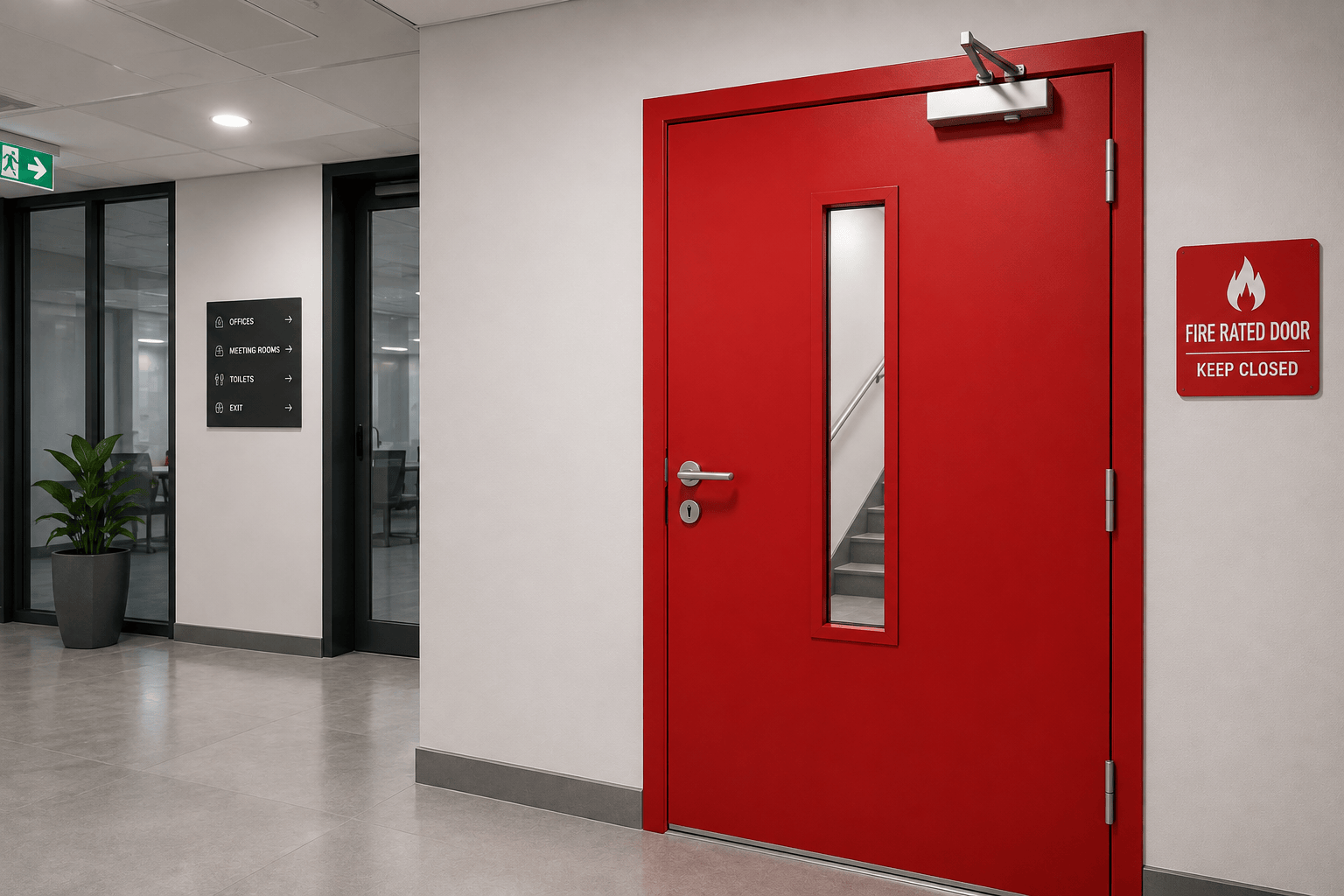
Fire Rated Door is an essential component of passive fire protection, helping limit the spread of fire, smoke, and heat within a building.
Fire safety is not only about detecting and extinguishing a fire—it is also about containing fire, smoke, and heat long enough to protect people, property, and critical areas of a building. One of the most important passive fire protection solutions used for this purpose is a fire rated door.
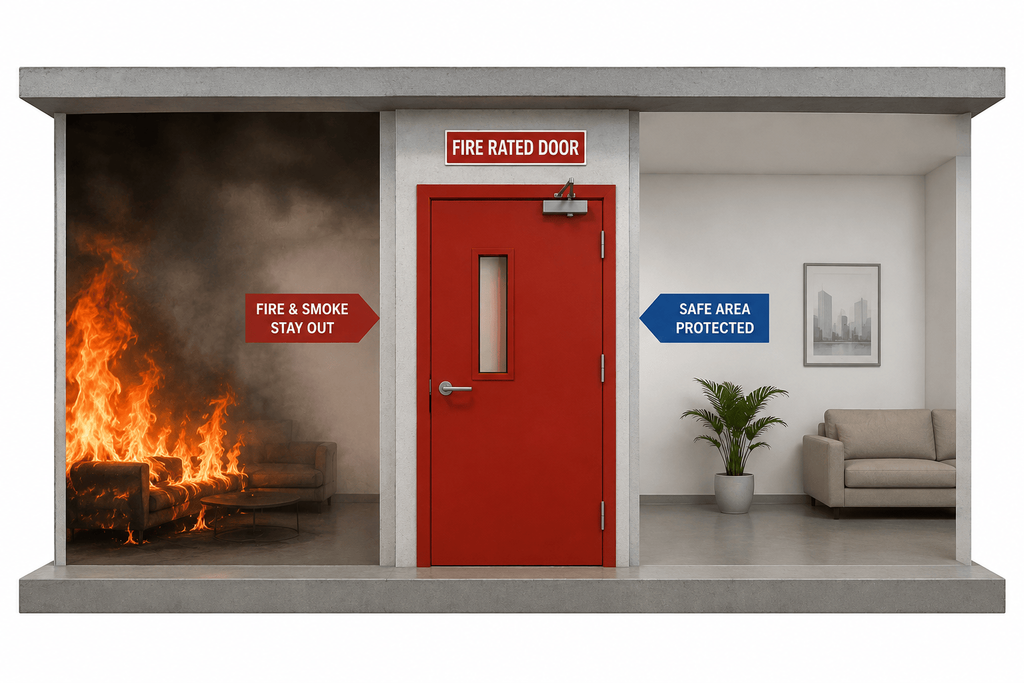
A properly designed and installed fire rated door acts as a protective barrier between different areas of a building. During a fire, it helps limit the spread of flames and smoke, providing occupants with valuable time to evacuate safely and allowing emergency responders more time to control the situation.
At Reliant Energy & Safety Technology Ltd., we provide professional Fire Door Supply & Installation Solutions for commercial, industrial, residential, and other high-occupancy buildings, with a focus on quality, reliability, and proper installation.
What Is a Fire Rated Door?
A specially engineered door assembly designed to resist fire, heat, and smoke for a specified period of time.
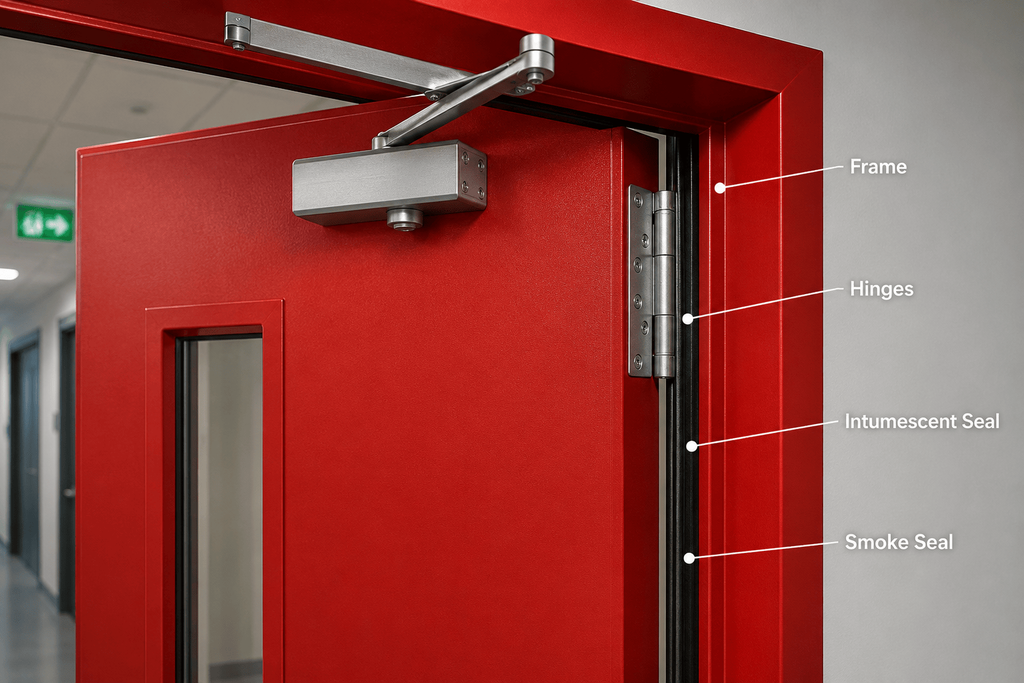
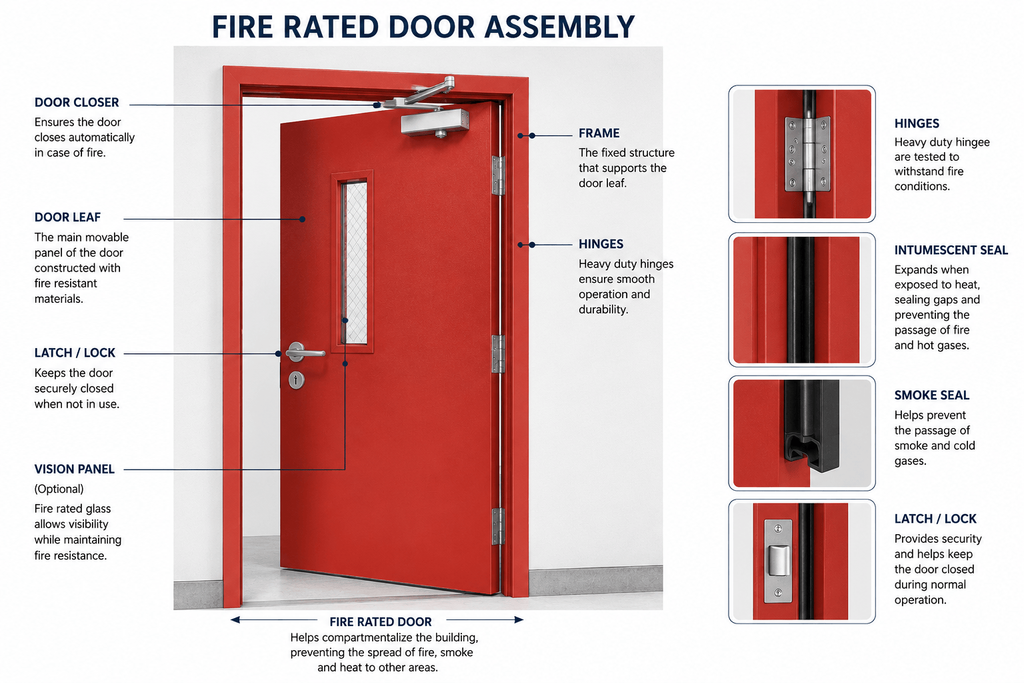
Unlike an ordinary door, a fire rated door is manufactured and tested as part of a complete door assembly. Depending on its design and rating, the assembly may include a fire-resistant door leaf, frame, hinges, closer, latch or lockset, seals, glazing where applicable, and other compatible hardware.
The main purpose of a fire door is not necessarily to stop a fire permanently. Instead, it is designed to delay the spread of fire and smoke from one area to another for a specified period, helping protect escape routes, compartments, equipment, and occupied areas.
Why Are Fire Rated Doors Important?
During a fire, flames and smoke can spread rapidly through corridors, stairwells, shafts, service areas, and other openings. An uncontrolled opening can allow fire and smoke to move quickly from one compartment to another.
Fire rated doors are an important part of a building’s passive fire protection strategy because they help maintain separation between designated fire compartments.
Key benefits include:
- Helps limit fire spread between protected areas
- Helps control smoke movement when suitable smoke seals are incorporated
- Protects escape routes such as corridors and stairwells
- Provides additional evacuation time for building occupants
- Helps protect critical areas and equipment
- Supports fire compartmentation
- Improves overall building fire safety
- Works as part of a complete passive fire protection system
How Does a Fire Rated Door Work?
The effectiveness of a fire rated door depends on the complete door assembly and its installation.
When exposed to fire, the door assembly is designed to maintain its protective performance for its specified rating period. Depending on the door construction, the materials used may resist heat and fire, while intumescent seals can expand when exposed to high temperatures and help close gaps around the door.
A properly functioning door closer also helps ensure that the door returns to the closed position after use. This is particularly important because a fire rated door that is left open may not provide the intended level of protection during a fire.
The overall performance therefore depends on several factors:
Fire Rated Door Leaf + Compatible Frame + Fire-Rated Hardware + Seals + Door Closer + Correct Installation
Common Applications of Fire Rated Doors
Fire rated doors are commonly used in buildings where fire compartmentation and protected escape routes are required.
Typical applications include:
1. Commercial Buildings
Office buildings, shopping complexes, commercial facilities, and business centers may use fire rated doors to protect staircases, corridors, electrical rooms, service areas, and other designated locations.
2. Industrial Facilities
Factories, warehouses, production facilities, and industrial buildings may require fire rated doors between different fire compartments and around higher-risk areas.
3. Hospitals & Healthcare Facilities
Healthcare facilities require careful consideration of fire safety because occupants may have limited mobility. Fire rated doors can help compartmentalize areas and protect evacuation routes.
4. Residential & Apartment Buildings
Fire rated doors can be used in apartment buildings, staircases, electrical rooms, service rooms, and other areas where fire separation is required.
5. Hotels & Hospitality Facilities
Hotels and similar facilities use fire safety measures to protect guest rooms, corridors, staircases, service areas, and other critical zones.
6. Electrical & Mechanical Rooms
Electrical rooms, generator rooms, pump rooms, boiler rooms, and other equipment areas may require suitable fire-resistant doors depending on the building’s fire protection design.
Types of Fire Rated Doors
Fire rated doors can be available in different configurations depending on the building design, opening size, usage, and required fire performance.
Single Fire Rated Door
A single-leaf fire rated door is commonly used for standard-size openings and access points.
Typical applications:
Electrical rooms, staircases, service rooms, offices, plant rooms, and other protected areas.
[IMAGE – Product Image: Single-leaf Fire Rated Door, front-facing professional product photo.]
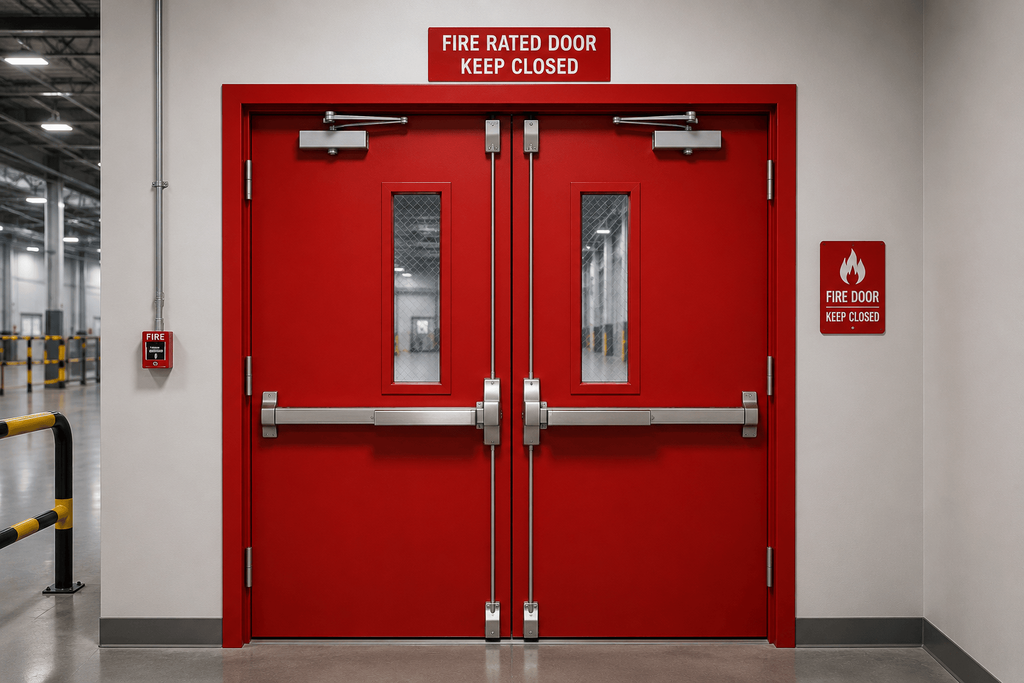
Double Fire Rated Door
Double-leaf fire rated doors are suitable for wider openings where a single door leaf cannot provide the required access width.
Typical applications:
Industrial facilities, warehouses, equipment rooms, larger service areas, and other wider openings.
Fire Rating: What Does It Mean?
One of the most important specifications of a fire rated door is its fire resistance rating.
The rating generally indicates how long the tested door assembly can maintain its required fire performance under specified test conditions.
For example, a door may be specified with a particular rating such as 30, 60, 90, or 120 minutes, depending on the project requirement and applicable testing or certification.
However, selecting a fire rated door should not be based only on the number of minutes.
The required rating should be determined according to the building’s:
- Fire strategy
- Compartmentation requirements
- Building type and occupancy
- Location of the door
- Risk level
- Applicable building codes
- Project specifications
- Required testing or certification
Important: The fire resistance performance of the complete door assembly should be verified through appropriate testing or certification for the intended application.
Important Components
A fire rated door is more than just a fire-resistant door leaf. The complete assembly needs to work together.
Door Leaf
The door leaf is manufactured using fire-resistant materials and construction methods designed to provide the required fire performance.
Fire Rated Frame
The frame must be compatible with the door leaf and the required fire rating. An incorrectly selected or installed frame can compromise the overall performance of the assembly.
Intumescent Seal
Intumescent materials are designed to expand when exposed to high temperatures and help seal gaps around the door assembly.
Smoke Seal
Where required, smoke seals help reduce smoke leakage through gaps around the closed door.
Hinges
Fire-rated hinges or other approved hardware should be suitable for the door assembly and its intended use.
Door Closer
A suitable door closer helps the door automatically return to the closed position after opening.
Lock & Latch
The locking and latching hardware should be compatible with the fire-rated door assembly and project requirements.
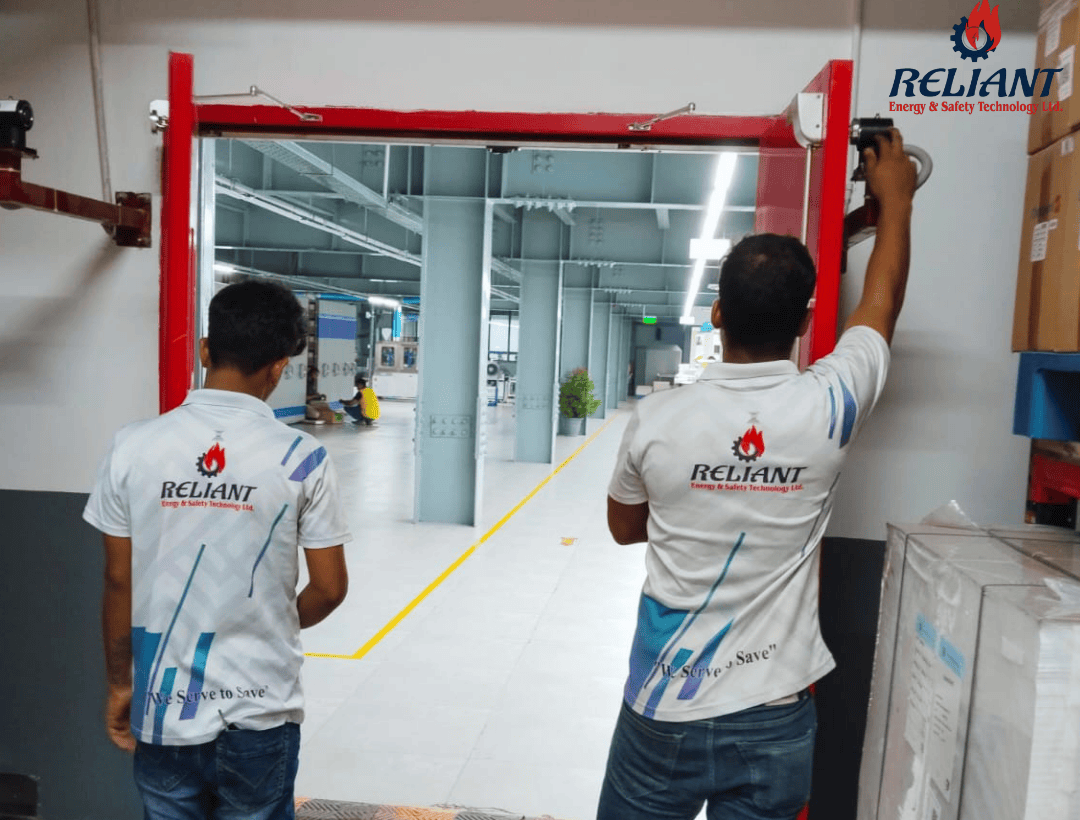
Fire Rated Door Installation: Why Proper Installation Matters
Even a high-quality certified fire rated door can fail to provide its intended performance if it is installed incorrectly.
Proper installation should consider:
- Correct door and frame alignment
- Appropriate fixing and anchoring
- Correct gap tolerances
- Proper installation of intumescent and smoke seals
- Correct hinge positioning
- Proper door closer adjustment
- Correct latch and locking operation
- Suitable wall construction and surrounding structure
- Compatibility of all hardware and components
After installation, the door should be inspected and tested to ensure that it operates correctly and closes properly.
Fire Rated Door Maintenance & Inspection
A fire rated door should not be treated as a “fit and forget” product.
Regular inspection is important to ensure that the door remains functional throughout its service life.
During inspection, check:
Door Operation:
Does the door open and close smoothly?
Door Closer:
Does the door close fully without excessive force or slamming?
Seals:
Are the intumescent and smoke seals present, properly positioned, and undamaged?
Hardware:
Are hinges, locks, latches, and other hardware secure and functioning properly?
Door & Frame:
Are there any visible signs of damage, distortion, corrosion, or unauthorized modification?
Clearance:
Are the gaps around the door within the required specification?
A damaged, modified, or improperly maintained fire rated door may not perform as intended during a fire.
Fire Rated Door Standards & Certification
Fire rated doors should be selected based on the applicable project requirements and recognized fire testing standards.
For many projects, EN 1634-1 is a relevant standard for fire resistance and smoke control testing of door, shutter, and window assemblies.
Depending on the project, location, authority requirements, and specifications, other standards or certification requirements may also apply.
Therefore, before selecting a Fire Rated Door, it is important to verify:
- Applicable fire safety codes
- Required fire resistance rating
- Test reports or certification
- Door assembly configuration
- Hardware compatibility
- Installation requirements
- Project-specific specifications
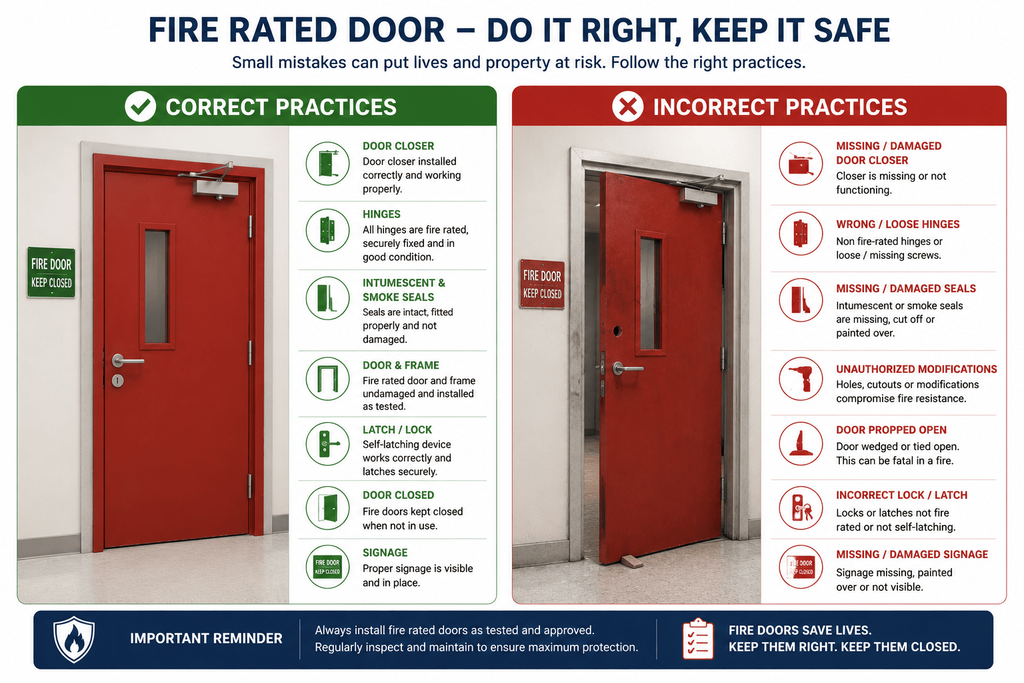
Common Mistakes to Avoid
Several installation and maintenance practices can reduce the effectiveness of a fire rated door.
❌ Propping the Door Open
A fire rated door that is permanently held open may not provide the intended protection during a fire.
❌ Using Non-Compatible Hardware
Replacing approved fire-rated hardware with unsuitable components can affect the performance of the complete assembly.
❌ Damaging or Removing Seals
Intumescent and smoke seals are important components of the door assembly and should not be removed or damaged.
❌ Incorrect Installation
Poor alignment, excessive gaps, incorrect fixing, or improper frame installation can compromise performance.
❌ Ignoring Maintenance
Regular inspection is necessary to identify damage, wear, or operational problems before they become serious safety concerns.
How to Choose the Right Fire Rated Door?
Choosing a Fire Rated Door should be based on the actual requirements of the building rather than simply selecting the cheapest or highest-rated option.
Consider the following:
- Determine the required fire rating
- Identify the door location and application
- Check the required door size and configuration
- Select a compatible frame
- Verify hardware requirements
- Check applicable standards and certification
- Consider smoke control requirements where applicable
- Ensure professional installation
- Plan regular inspection and maintenance
A professional fire protection company can help assess the project requirements and recommend a suitable door configuration.
Why Choose Reliant Energy & Safety Technology Ltd.?
At Reliant Energy & Safety Technology Ltd., we understand that fire safety is not simply about supplying equipment—it is about providing solutions that support the overall safety strategy of a building.
Our Fire Rated Door solutions are supported by our experience in Fire Protection System Design, Supply, Installation, Testing, Commissioning & Maintenance.
We focus on:
- Quality fire protection products
- Professional supply and installation
- Proper alignment and fitting
- Technical project support
- Safety-focused solutions
- Reliable after-sales support
- Project-specific requirements
Whether you require Single Fire Rated Doors, Double Fire Rated Doors, or other passive fire protection solutions, our team can support your project from product selection through installation.
Final Thoughts
Fire Rated Doors play a critical role in passive fire protection by helping contain fire and smoke and supporting safe evacuation during an emergency.
However, the effectiveness of a fire rated door depends on more than the door itself. Correct product selection, certified performance, compatible hardware, professional installation, and regular maintenance are all essential for achieving the intended level of protection.
If you are planning a new building, renovation, factory setup, commercial facility, or fire safety upgrade, selecting the right Fire Rated Door should be an important part of your overall fire protection strategy.
Reliant Energy & Safety Technology Ltd. is committed to providing dependable fire protection solutions designed around project requirements and safety considerations.
Frequently Asked Questions (FAQ)
1. What is a Fire Rated Door?
A Door is a specially designed and tested door assembly that helps resist fire, heat, and smoke for a specified period, helping protect people and property.
2. Where are Fire Rated Doors used?
They are commonly used in commercial buildings, factories, warehouses, hospitals, hotels, staircases, electrical rooms, generator rooms, and other areas requiring fire compartmentation.
3. What fire ratings are available for Fire Rated Doors?
Common fire resistance ratings include 30, 60, 90, and 120 minutes, depending on project requirements and applicable standards.
4. Why is proper installation important?
Correct installation ensures proper alignment, sealing, closing, and hardware operation. Even a certified Fire Rated Door may not perform as intended if installed incorrectly.
5. Do Fire Rated Doors require regular maintenance?
Yes. Regular inspection of the door, frame, hinges, seals, closer, lock, and latch is important to ensure proper operation and continued performance.
6. How can I get a Fire Rated Door from Reliant EST?
Reliant Energy & Safety Technology Ltd. provides Fire Rated Door supply and installation solutions. Contact our team with your project requirements for technical assistance and quotation.