
Fire hazards can occur without warning and escalate into major disasters within seconds. In modern buildings, industrial facilities, and commercial spaces, a reliable fire safety system is essential for protecting both life and property.
At Reliant Energy & Safety Technology Limited, we provide advanced, internationally standard Fire Alarm & Detection Systems designed to ensure early detection and rapid response in fire-related emergencies.
What is a Fire Alarm & Detection System?
A Fire Alarm & Detection System is a safety solution designed to detect smoke, heat, or fire at an early stage and alert occupants immediately so that appropriate action can be taken.
Components of a Fire Alarm System:
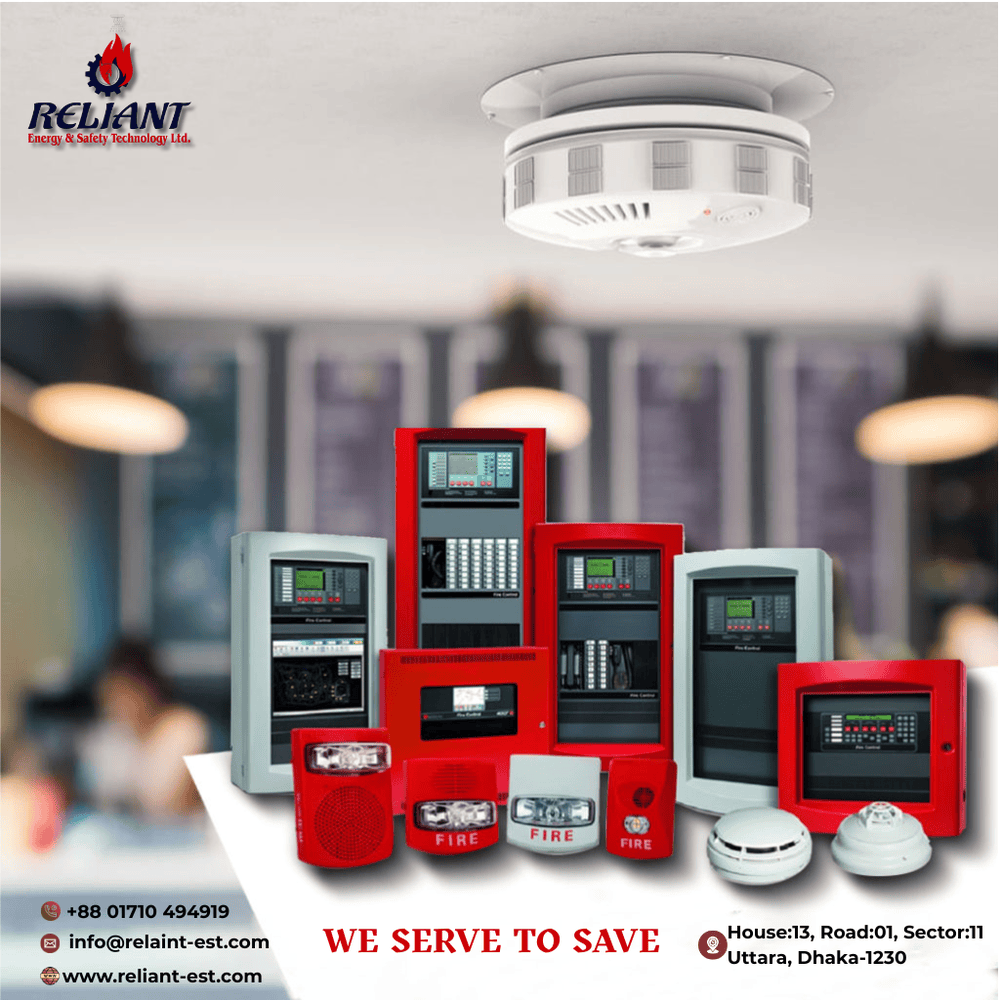
- Fire Alarm Control Panel (FACP)
- Smoke and Heat Detectors
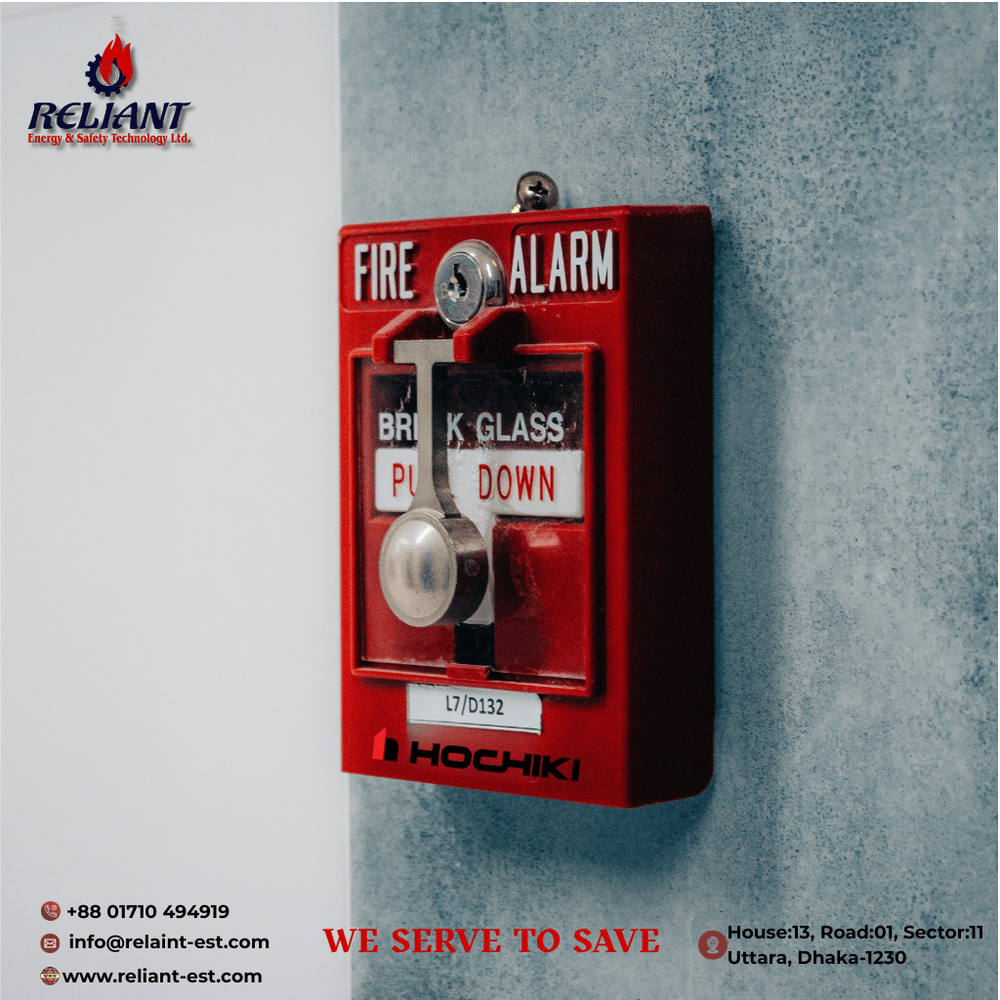
- Manual Call Points (MCP)
- Alarm Bells, Sounders, and Flashers
- Gas Leak Detectors (optional)
- Monitoring and Control Modules
Functionality:
The system continuously monitors environmental conditions. When it detects abnormal smoke, heat, or gas levels, it activates the alarm system and alerts occupants to evacuate safely.
Types of Fire Alarm & Detection Systems
Addressable Fire Alarm System
Each device has a unique address, allowing precise identification of the location of a fire event.
Key Features:
- Exact location identification
- High accuracy
- Suitable for large and complex buildings
Conventional Fire Alarm System
A zone-based system suitable for small to medium-sized buildings.
Key Features:
- Cost-effective solution
- Simple installation
- Easy maintenance
Wireless Fire Alarm System
A system that operates without extensive wiring.
Key Features:
- Easy installation
- Flexible configuration
- Suitable for modern or temporary setups
Gas and Smoke Detection System
Designed to detect gas leaks, smoke, and fire risks at an early stage.
Key Features:
- Early warning capability
- High safety coverage
- Suitable for industrial applications
Importance of Fire Alarm Systems
Fire alarm systems provide several critical safety benefits:
- Early detection of fire hazards
- Immediate warning for evacuation
- Reduction of property damage
- Improved workplace safety
- Faster emergency response
How Fire Alarm Systems Are Controlled
Fire alarm systems are managed through a central control panel.
Working Process:
- The system continuously monitors all connected detectors
- When smoke or heat is detected, the alarm is triggered automatically
- Alarm sounders and visual indicators activate immediately
- The control panel allows system reset, silence, or diagnostics
- Emergency evacuation procedures are initiated
Proper installation and regular maintenance are essential to ensure reliable performance during emergencies.
Why Choose Us
Choosing the right fire safety provider is critical for ensuring long-term protection.
With Reliant Energy & Safety Technology Limited, you benefit from:
- Experienced and certified engineering professionals
- Solutions compliant with international standards
- Fast installation and technical support
- Proven experience across multiple industries
Our Solutions
We provide complete fire safety solutions, including:
- System design and consultation
- Supply of high-quality equipment
- Professional installation
- Testing and commissioning
- After-sales support and maintenance
Key Features of Our Systems
- Early fire detection capability
- High reliability and accuracy
- Real-time alert system
- Easy operation and maintenance
- Integration with other safety systems
Advantages and Limitations
Advantages:
- Enhances life and property safety
- Provides early warning of fire hazards
- Reduces potential damage
- Suitable for all types of buildings
Limitations:
- Requires professional installation
- Needs regular maintenance
Frequently Asked Questions (FAQs)
Q1. What is a Fire Alarm & Detection System?
It is a system that detects smoke, heat, or fire and alerts occupants immediately.
Q2. Can fire alarm systems detect smoke only?
No, they can detect smoke, heat, and in some cases gas leaks, depending on the system configuration.
Q3. Is remote monitoring possible?
Yes, advanced systems support remote monitoring and access.
Q4. Where can fire alarm systems be installed?
They can be installed in residential, commercial, industrial, and institutional buildings.
Q5. How often should the system be maintained?
Regular maintenance is recommended every 3 to 6 months.
Q6. Are fire alarm systems mandatory?
In many commercial and industrial buildings, they are required to meet safety regulations.
Conclusion
Fire safety should always be a priority rather than an afterthought. A reliable Fire Alarm & Detection System ensures early warning, timely response, and effective protection of life and property.
With advanced solutions from Reliant Energy & Safety Technology Limited, you can ensure a safer and more secure environment for your people and assets.